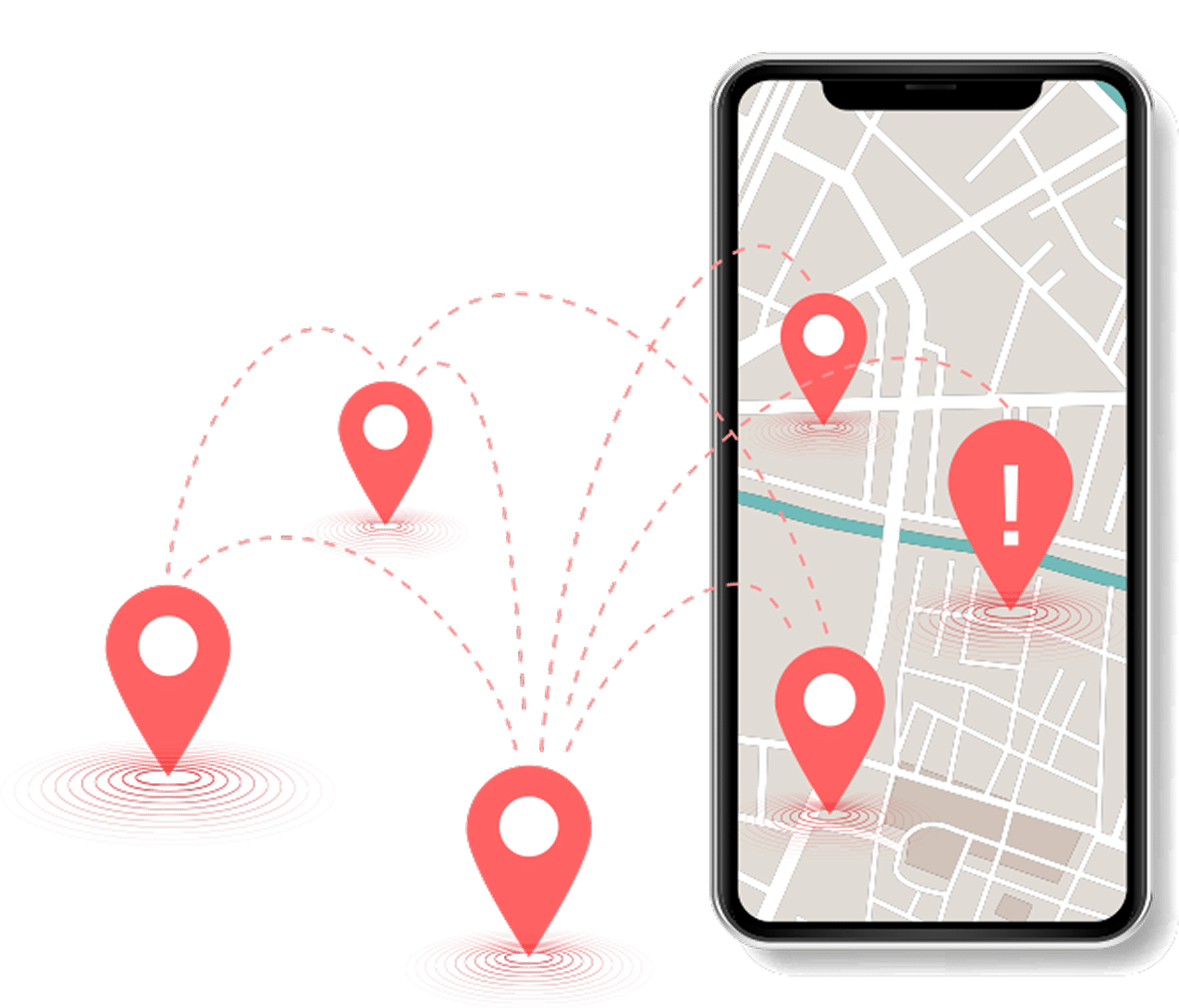
Washington businesses operate in one of the most competitive regional economies in the United States. From busy urban hubs like Seattle to rapidly growing cities such as Spokane, Tacoma, and Bellevue, companies must compete for customer attention both online and offline.
Location-based marketing gives businesses in Washington the ability to reach real people based on where they go

Trusted by local and multi-location businesses that want measurable growth.
Watch this quick overview to understand how Location-based marketing helps businesses reach nearby customers and turn location data into real conversions.
Location-based marketing is a digital advertising strategy that targets consumers based on their real-time location data.
Using technologies such as GPS, mobile signals, and device data, marketers can deliver ads to users when they
Enter a defined geographic area
Spend time near a competitor
Travel within targeted neighborhoods
1. Define Target Locations
• Neighborhoods
• Retail centers
• Office complexes
• Universities
• Healthcare facilities
2. Identify Audience Behavior
• Shoppers visiting retail stores
• Event attendees
• People visiting competitor locations
• Commuters traveling through targeted zones
• Residents living in nearby neighborhoods
3. Deliver Targeted Ads Across Devices
• Mobile apps
• Websites
• Streaming platforms
• Connected TV
• Desktop devices
Creative included. We design the ads for approval so you can launch faster.
Location-based marketing is especially effective for businesses that rely on local customers or regional demand.
Promote offers to shoppers visiting competing stores.
Conquest nearby dealerships and service centers with trade-in and financing messages..
Reach patients comparing providers with new-patient offers.
Target nearby competitors with time-sensitive promos.
Capture homeowners shopping competitors for seasonal or emergency work.
Reach high-value prospects visiting other firms and offices.
A retail store can target ads to people visiting nearby shopping malls or competitor locations
Restaurants often send special offers to mobile users within a few blocks to increase immediate walk-in customers.
Modern consumers rely heavily on mobile devices during daily activities, making location-driven marketing extremely effective.
Location signals show real intent. For example, someone visiting a car dealership is more likely to be shopping for a vehicle.
Geofencing campaigns often achieve higher click-through and conversion rates than traditional digital ads.
Precise targeting helps businesses reduce wasted ad spend and improve overall campaign ROI.
Location marketing can drive real-world store visits and increase local visibility.
Businesses can target users visiting competitor locations and present offers to encourage them to choose another brand.
Location-based marketing is a digital advertising strategy that targets consumers based on their real-world location data.
This strategy connects online advertising with real-world behavior, allowing brands to engage consumers with highly relevant messaging.
Location-based marketing is a strategy that targets consumers based on their real-world location using mobile device data and marketing.
Geofencing creates virtual boundaries around physical locations. When mobile devices enter those zones, they can receive targeted advertising across apps, websites, and digital platforms.
Yes. Studies show geo-targeted campaigns can significantly improve engagement and conversions compared to traditional advertising methods.
Retail stores, restaurants, automotive dealerships, healthcare providers, real estate agencies, and event organizers often see the strongest results.
Yes. Businesses can place geofences around competitor locations and deliver ads to devices that visit those locations.
Geofencing a technology used within location-based marketing. It creates virtual boundaries around physical locations such as stores, events, or neighborhoods. Location-based marketing is the broader strategy that uses geofencing and other location data to deliver targeted advertising to consumers based on where they go
Businesses can run hyper-local campaigns targeting specific neighborhoods, commercial districts, and event locations across Washington. Instead of advertising across an entire city, campaigns can focus on high-traffic areas where potential customers are most likely to be present, improving ad efficiency and conversion potential.
The cost of location-based marketing campaigns depends on factors such as the size of , the number of locations being geofenced, ad formats, and campaign duration. Many businesses start with a monthly advertising budget, which can then be optimized based on campaign performance and conversion results.