
Yes, geofencing can target individual buildings using polygon-based mapping instead of simple radius targeting the existing geofencing technology.
Advertisers draw precise boundaries around locations like stores, offices, or venues.However, accuracy depends on traffic and spacing.
Dense or multi-tenant buildings can reduce precision despite advanced strategies like those used by GetGeofencing.com.





Trusted by local and multi-location businesses that want measurable growth.
This is why campaign setup matters. A sloppy geofence around a building can collect the wrong audience.
A tight, well-planned polygon can produce a much stronger audience.
Existing technology page already explains that geofencing campaigns combine location signals, mobile device data, and digital advertising platforms to deliver targeted messaging.
Quality of location data
Shape of the geofence
Physical layout of the property
Nearby buildings and roads
Indoor versus outdoor environments
Mobile device signal availability
Platform privacy rules
Audience size
Polygon Geofencing Advantage
Radius Targeting Problem
If a business is inside a multi-tenant building, a geofence may capture people visiting the entire building, not only that one business.
For example, if a law firm, medspa, accountant, dental office, and insurance agency all operate inside the same building, a building-level geofence may not be able to separate visitors by suite with perfect confidence.
Target the full building if all visitors
Use competitor locations with footprints
Add website retargeting
Search retargeting
Addressable geofencing
Around multiple relevant locations
Related event venues
Real-world visitor behavior, while Google Ads location targeting focuses on broader geographic areas.
Target audiences visiting competitor showrooms for high intent
Reach visitors at particular event locations for engagement
Visitors at target car dealership lots for sales opportunities
Engage visitors at healthcare facilities for service outreach
Connect with students at campus facilities for targeted outreach
Travelers at lodging destination for targeted marketing campaigns
The target visitors at real estate demo spaces for lead generation
Shoppers at store locations for purchase-focused campaigns
Yes, you can target an individual store inside a mall using geofencing, but accuracy may vary due to shared spaces and signal limitations.
Building geofencing can target locations like stores, offices, restaurants, event venues, clinics, dealerships, and competitor businesses.
Competitor Locations
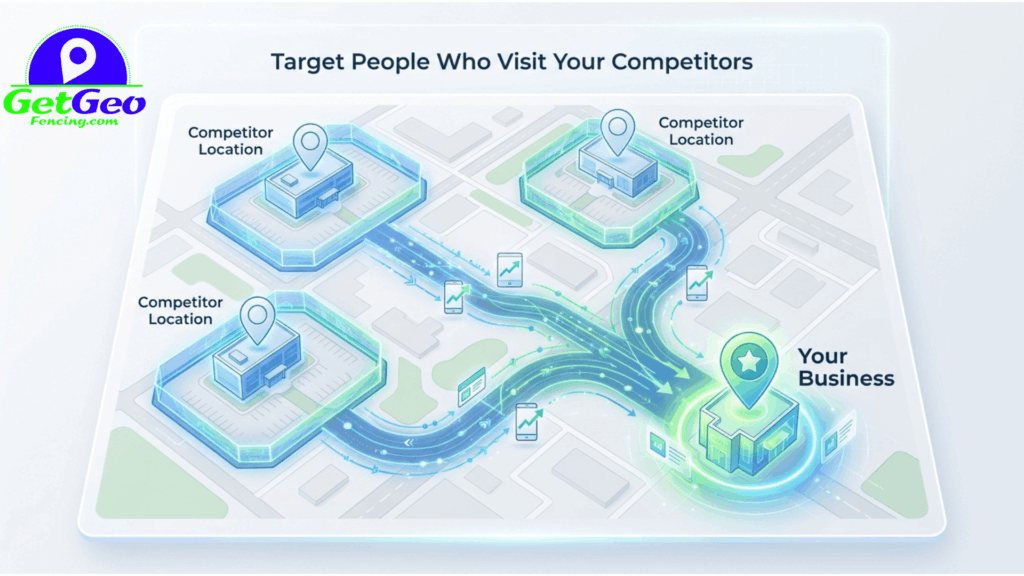
Geofence rival businesses and serve ads to people who visited them — capturing audiences with proven buying intent at the exact moment they’re considering alternatives.
Event Venues
Advertisers can target people attending specific events, conferences, festivals, trade shows, sports games signals strong interest or conventions.
Medical and Wellness Clinics
A healthcare, wellness, or medspa campaign may target relevant clinics, wellness centers, fitness studios, or related service locations.
Real Estate and Model Homes
Builders, real estate agents, and apartment communities can target people visiting model homes, sales offices, competing communities, or home shows.
Political Campaign Locations
A political campaigns may use geofencing to reach voters, event attendees, rally audiences, district locations, or issue-based gathering places.
Automotive Dealerships
Fence competing dealership lots and serve targeted ads to shoppers who walked the competition’s floor — capturing high-intent buyers at a critical decision moment.
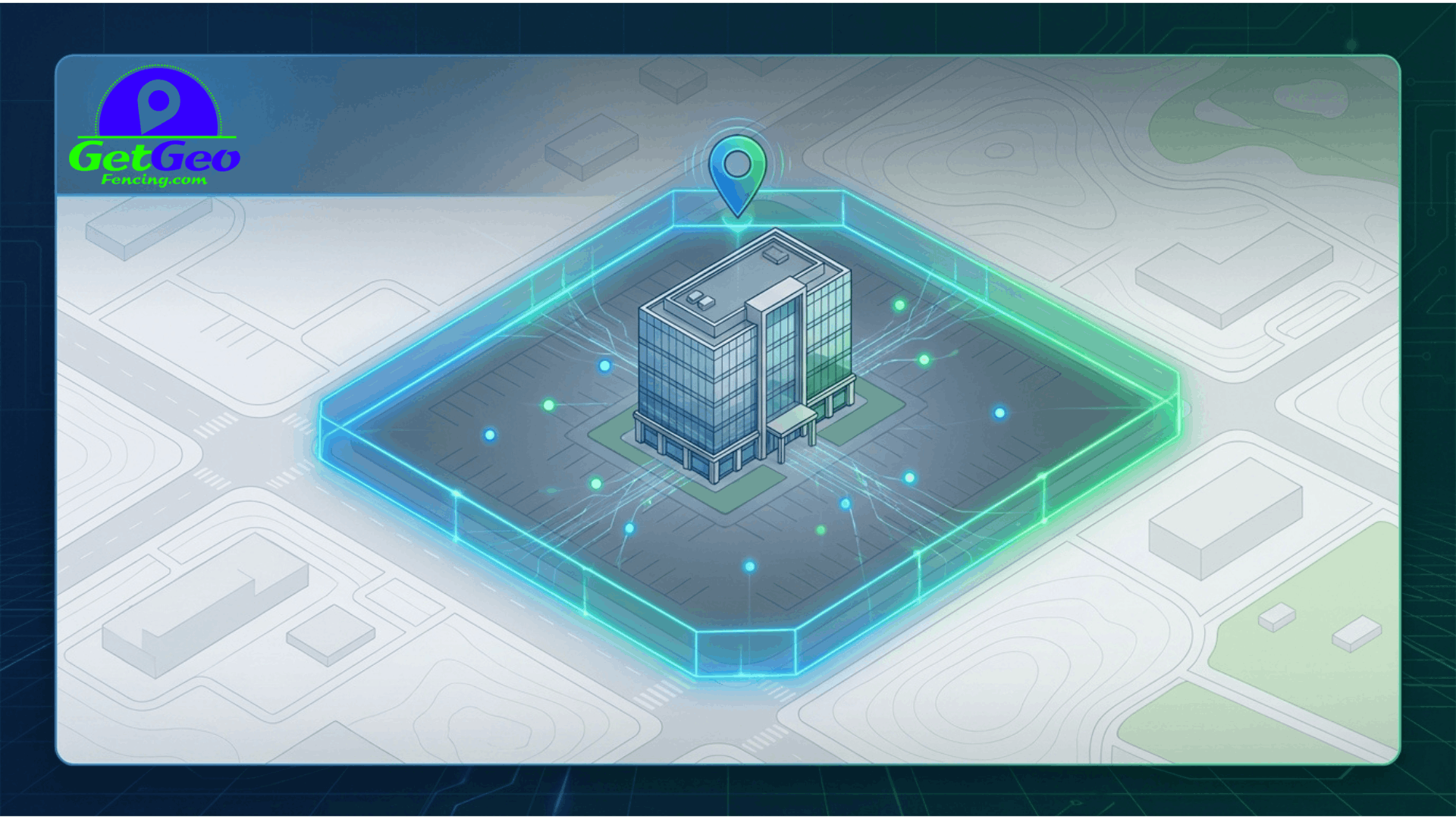
Building-level geofencing targets users around a specific building using precise digital boundaries.
Individual building geofencing works by creating precise virtual boundaries around a location to target users based on their physical area.
Examples include competitor locations, event venues, retail stores, campuses, hotels, medical offices, or sales centers.
The boundary should be tight enough to reduce waste but practical enough to capture meaningful audience volume.

When mobile devices enter the geofenced area, they may be added to an anonymous audience segment, depending on platform rules.
These may include display ads, mobile ads, video ads, retargeting inventory, and connected TV depending on the campaign strategy.
Campaign reporting can show metrics such as impressions, clicks, click-through rate, campaign pacing, and in some cases, foot-traffic attribution.
Even when a building can be targeted, there still needs to be enough visitor volume to make the campaign worthwhile.
Discover our full range of geofencing and digital advertising services designed to help you reach targeted audiences, increase engagement, and drive measurable marketing results.
Addressable geofencing targets specific households using precise location data.
Event marketing promotes brands by targeting audiences before during and after events.
Political geofencing targets voters with ads based on specific locations and events.
Digital TV advertising delivers targeted video ads on connected streaming platforms
Effective geofencing campaign examples show how businesses target real-world locations to audiences and improve marketing results.
Yes, geofencing can target individual buildings when polygon-based geofences are used and the target location has a clear enough footprint.
A good geofencing provider should review the target locations, confirm whether the buildings can be fenced cleanly, explain any limitations, and recommend the best targeting approach before launch.
But the quality of the campaign depends on the strategy.
For household-level targeting, addressable geofencing may be a better option when the campaign starts with a list of physical addresses.
Addressable geofencing is different from standard location-based geofencing because it focuses on households or properties rather than real-time visitors to a location.
Geofencing can target an apartment building or apartment complex, but it should not be presented as a reliable way to target one specific apartment unit.
Building-Level Geofencing Is a Good Fit
Geofencing May Not Be the Best Fit
For businesses with physical locations, foot-traffic attribution is especially valuable because it helps estimate whether exposed users later visited a target location.
Total number of times ads shown
Number of times users clicked ads
Percentage of users who click ads
Rate at which budget is spent over time
How well ad creatives drive engagement
Grouped sets of locations used for target
Users interact with ads across devices
Actions users after interacting with ads
Measuring in-store visits generated
For example, a campaign could geofence competitor locations, serve ads to those visitors, and then measure whether exposed users later visited your dealership, store, clinic, restaurant, or sales office.
We deliver your message across multiple channels to maximize reach.
Various ad types can be used, including display ads, video ads, mobile ads, and social media ads depending on the campaign strategy.
Yes. Geofencing can target a single building when a polygon-based geofence is drawn around the building footprint or property boundary. This works best for standalone buildings, stores, dealerships, clinics, restaurants, event venues, and other locations with clear physical separation.
Sometimes, but it depends on the layout. Targeting one store inside a dense indoor mall is harder because multiple stores share walkways, entrances, walls, and foot traffic. In many cases, it is more practical to target the mall, shopping center, or outdoor property area rather than one individual store.
No, not reliably. Geofencing can target an apartment building or complex, but it should not be used as a guaranteed way to target one specific apartment unit. For household-level campaigns, addressable geofencing may be a better fit.
Sometimes. If the business is inside a multi-tenant office building, the geofence may capture visitors to the entire building rather than one specific suite. This can still be useful if the full building audience is relevant, but it is not always clean enough for precise suite-level targeting.
Polygon geofencing is a targeting method where a custom digital boundary is drawn around the actual shape of a location. This is more precise than radius targeting because it can follow the footprint of a building, property, event venue, or competitor location.
For building-level advertising, yes. Radius targeting creates a circle around a location, which can include nearby roads, unrelated businesses, parking areas, and people passing by. Polygon geofencing allows the campaign to focus more closely on the real-world area that matters.
Building-level geofencing can be highly accurate when the property has a clear footprint and enough separation from surrounding locations. Accuracy can be affected by location data quality, signal availability, nearby buildings, indoor environments, and how the geofence is drawn.
Building-level geofencing is commonly used by car dealerships, restaurants, retailers, medical clinics, medspas, real estate companies, funeral homes, churches, political campaigns, hotels, event marketers, and local service businesses.
Yes. Competitor geofencing is one of the most common uses of building-level geofencing. Businesses can place geofences around competitor locations and later serve ads to people who visited those places.
Many campaigns can use foot-traffic attribution to estimate whether people exposed to an ad later visited a physical location. This requires setting up a conversion zone around your business location and reviewing campaign reporting.