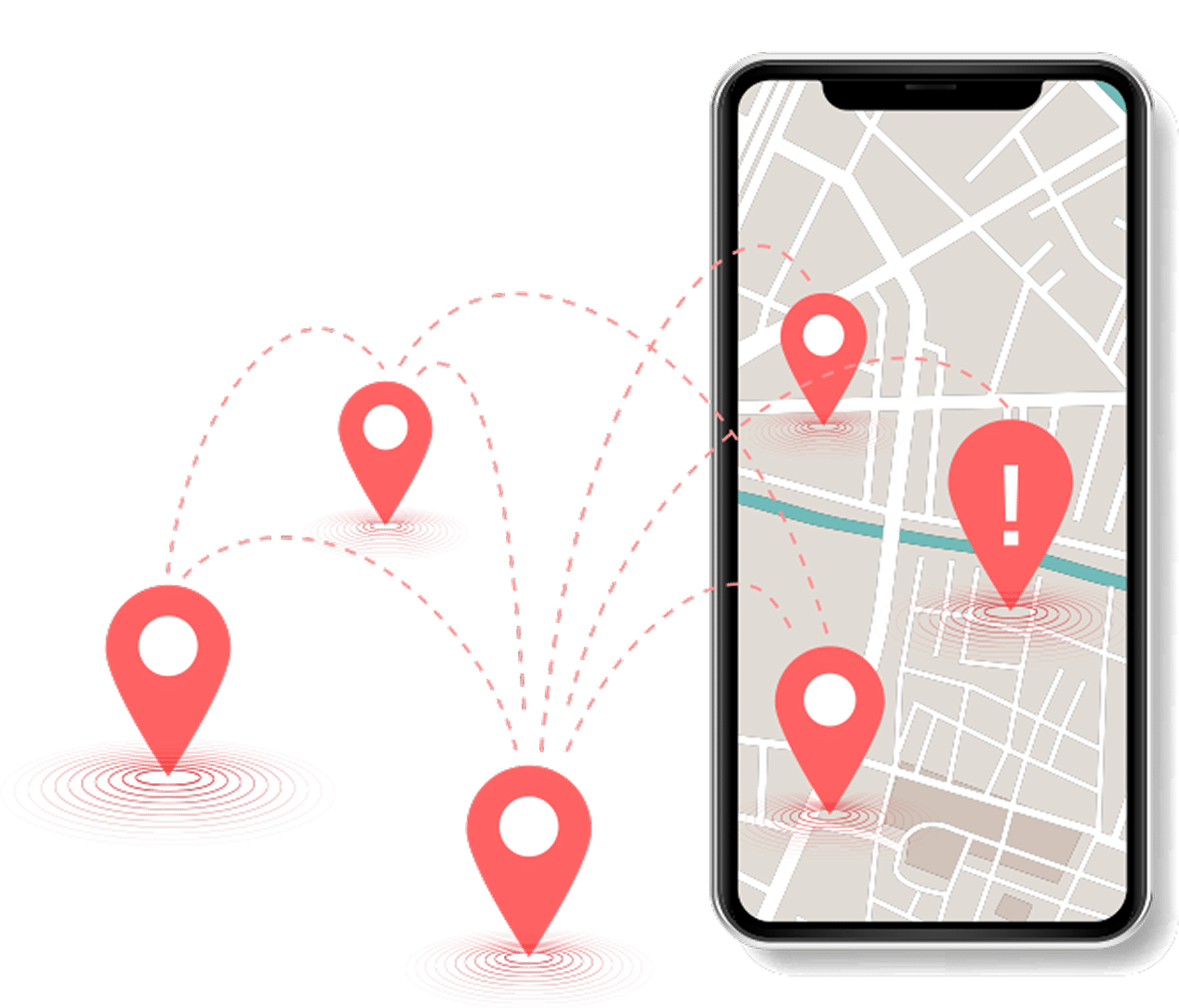
Geofencing marketing allows brands to deliver ads, offers, and messages to people when they enter a specific geographic area such as a competitor’s store, event venue, shopping center, or neighborhood.
Instead of advertising to everyone online, businesses can focus on people who are physically close and more likely to convert.

Trusted by local and multi-location businesses that want measurable growth.
Watch this quick overview to understand how geofencing in marketing helps businesses reach nearby customers and turn location data into real conversions.
Geofencing marketing is a location-based advertising technique that creates a virtual boundary around a real-world location. When a mobile device enters that area, businesses can trigger targeted ads or notifications.
When someone enters the defined geofence area, they can be targeted with ads across mobile apps, websites, and connected TV platforms.
Target Customers Near Competitor Stores
Reach Customers at Event Venues & High-Traffic Locations
Engage Audiences in Local Neighborhoods
To maximize campaign performance, businesses should follow these strategies.
Reach customers already considering similar products.
Trade shows, conferences, and sports events attract high-intent audiences.
Continue showing ads after someone leaves a geofenced area.
Short messages with clear offers perform best.
Monitor data and adjust targeting zones as needed.
Geofencing marketing uses anonymized location data to deliver relevant ads while protecting user privacy.
Geofencing works for any business that wants to reach customers in specific locations.
Promote offers to shoppers visiting competing stores.
Conquest nearby dealerships and service centers with trade-in and financing messages..
Reach patients comparing providers with new-patient offers.
Target nearby competitors with time-sensitive promos.
Capture homeowners shopping competitors for seasonal or emergency work.
Reach high-value prospects visiting other firms and offices.
Geofencing marketing uses GPS, Wi-Fi, or mobile data to create a virtual boundary around a specific location. When a user enters that area with their mobile device, targeted ads can be delivered to them across apps, websites
Choose a specific location to reach nearby potential customers.
When smartphones enter the geofenced area, anonymized mobile device IDs are added to a targeted advertising audience.
Those users are then served display ads, video ads, or connected TV ads across thousands of apps and websites.
Marketers can continue showing ads for days or weeks after the visit and track metrics like.
A retail store can target ads to people visiting nearby shopping malls or competitor locations
Restaurants often send special offers to mobile users within a few blocks to increase immediate walk-in customers.
Traditional digital advertising often wastes budget targeting broad audiences. Geofencing solves this problem by targeting people who are physically near a business or relevant location.
Ads are delivered only to people within specific locations instead of broad geographic areas.
Businesses can reach customers while they are actively near a purchase decision.
Because the audience has location-based intent, campaigns often perform better than traditional advertising.
Geofencing provides detailed data on impressions, engagement, and even store visits.
Businesses can focus advertising budgets on the most relevant local audiences.
Businesses using geofencing campaigns often see measurable improvements in local marketing performance.
By targeting real-world locations, geofencing turns everyday foot traffic into potential customers.
Geofencing marketing is a strategy that targets mobile users with ads when they enter a specific geographic area using GPS or location data.
Modern geofencing technology can target areas as small as individual buildings or parking lots depending on campaign setup.
Geofencing technology can target Local businesses often benefit the most because they rely heavily on nearby customers and local traffic.
Most campaigns can launch within a few days once geofences, creatives, and targeting settings are configured.
Geofencing uses anonymized location data and complies with privacy regulations when implemented properly.
The cost of a geofencing marketing campaign depends on factors such as the size of the targeted area, campaign duration, ad format, and audience size. Most campaigns are priced based on impressions or advertising spend, making geofencing flexible for both small businesses and large enterprises.
A typical geofencing campaign runs between 30 and 90 days to collect enough data and optimize performance. Longer campaigns allow marketers to retarget users who visited a geofenced location and improve overall conversion rates.
Geofencing and geotargeting are both location-based marketing strategies, but they work differently. Geofencing creates a virtual boundary around a specific location, such as a store, event venue, or competitor’s business. When users enter that area, they can receive targeted ads or messages. Geotargeting, on the other hand, focuses on broader areas like cities, regions, or ZIP codes and targets users based on general location data rather than a precise boundary.