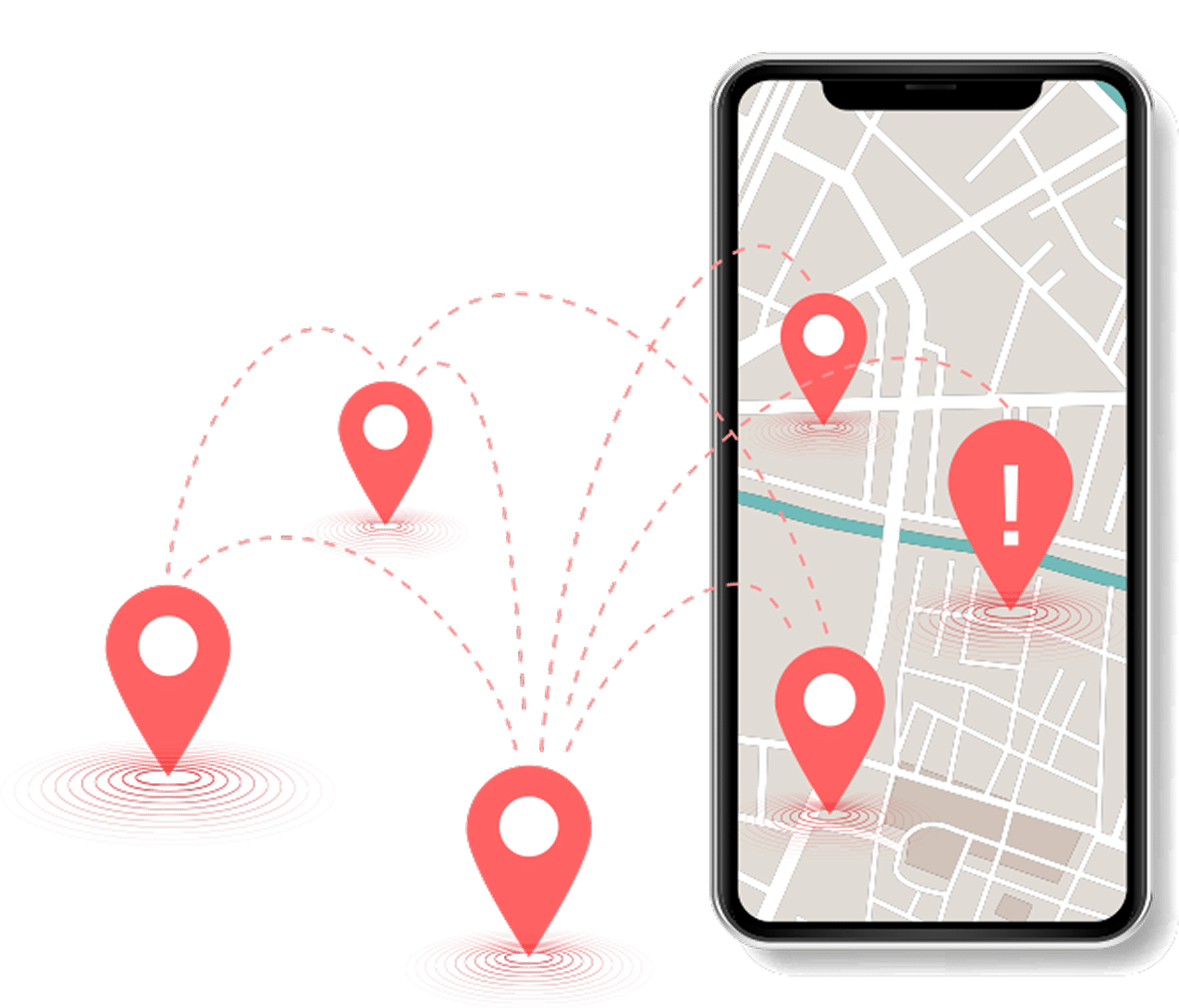
Businesses today use helps businesses reach potential customers based on their real-time location and movement.
Instead of advertising to a broad online audience, companies can show targeted ads to people visiting specific places such as neighborhoods, events, or competitor locations.
Businesses today use geofencing to capture high-intent audiences, increase local awareness, and drive measurable results.

Trusted by local and multi-location businesses that want measurable growth.
Watch this quick overview to understand how Technology helps businesses reach nearby customers and turn location data into real conversions.
Virtual boundary around creates a virtual perimeter around a real-world location such as a store, stadium, neighborhood, or event venue.
This allows businesses to advertise to people based on where they go in the real world.
Identify the device anonymously
Add it to a targeted audience group
Deliver relevant digital ads across websites
Businesses use different types of geofencing strategies to reach potential customers with relevant and timely ads.
Place geofences around competitor locations Competitor Geofencing and show ads to visitors afterward A car dealership targets people who recently visited competing dealerships.
Event Geofencing Capture audiences attending large gatherings such as trade shows, conferences, sports games, festivals, and expos. These audiences can later receive ads promoting relevant products or services.
Instead of targeting a location radius Addressable Geofencing this strategy targets specific households or properties using address data. This is useful for home services, real estate marketing, and local retail campaigns.
Advertisers can create geofences around specific ZIP codes, neighborhoods, or communities. This helps promote nearby businesses to people living or frequently visiting that area.
This strategy targets people who have previously visited a specific store or location. Businesses can later show ads to bring those visitors back with special offers or promotions.
Businesses that adopt location-based marketing strategies early can gain a significant competitive advantage in local markets.
Geofencing works best for businesses that depend on local audiences or physical locations.
Promote offers to shoppers visiting competing stores.
Conquest nearby dealerships and service centers with trade-in and financing messages..
Reach patients comparing providers with new-patient offers.
Target nearby competitors with time-sensitive promos.
Capture homeowners shopping competitors for seasonal or emergency work.
Reach high-value prospects visiting other firms and offices.
Geofencing campaigns combine location signals, mobile device data, and digital advertising platforms to deliver targeted messaging.
Geofencing works because it targets people who are already in the market for a product or service.
People visiting competitor stores or industry events are already researching products.
Businesses focus advertising budgets only on relevant audiences.
Campaigns target users based on actual movement patterns, not just demographics.
Businesses can track when advertising influences physical visits
Ads can appear across mobile, desktop, video, and connected TV.
Modern geofencing providers offer more than simple radius targeting.
These capabilities help businesses measure real ROI from location-based marketing campaigns.
Marketing uses GPS, Wi-Fi, or cellular data to create virtual boundaries around real-world locations. When a mobile device enters that area, marketers can deliver targeted ads or collect audience data for future advertising campaigns.
Geofencing uses anonymous device identifiers rather than personal identity information. Campaigns operate within digital advertising privacy regulations.
Advanced geofencing systems can target locations down to individual buildings, stores, or properties, especially when using polygon-based targeting rather than simple radius targeting.
Geotargeting usually targets broader areas such as cities or ZIP codes, while geofencing creates precise virtual boundaries around specific locations.
 Many platforms provide foot-traffic attribution, which estimates when users who saw an ad later visited a physical business location.
Small businesses, local service providers, event organizers, and regional brands can all benefit from geofencing campaigns.
The cost of a geofencing marketing campaign cost depends on several factors such as the size of the targeted area, audience volume, campaign duration, and advertising channels used. Businesses can target specific locations like competitor stores, event venues, shopping centers, or neighborhoods, and the campaign budget adjusts based on how large and competitive those locations are.
Most geofencing campaigns begin collecting audience data within the first few days after launch. However, meaningful performance insights—such as engagement rates, ad clicks, and store visit attribution—usually appear after 2 to 4 weeks of campaign activity. This timeframe allows enough data to optimize targeting, ad creatives, and audience segments for better performance.