
We understand your needs.
We create customized strategies for your brand.
We help you build and target the right audience
Our approach focuses on delivering measurable results.
We tailor solutions specifically for your brand.
We continually refine your campaign for maximum ROI.
We help businesses grow in new markets and build brand awareness
Our geofencing ads give you a competitive edge with location intelligence.
01
Track in-person conversions with geofencing, targeted geofencing, and OTT/CTV advertising.
02
Gain deeper insight into how geofencing correlates with your strategies.
03
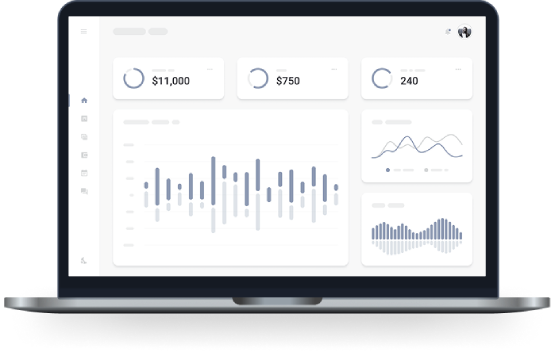
Track impressions, clicks, calls, and other critical metrics.
04
Visualize data to optimize and pivot marketing spends in real-time for faster performance.
05
Download PDF, Excel, and PPT reports with your logo for team and client sharing.
Geofencing advertising is no longer experimental; it’s essential. As more customers rely on their phones to guide everyday decisions, businesses have a new opportunity to connect with them in the exact places where those decisions are being made. From retail storefronts to auto lots to trade show floors, location-based marketing is changing how brands capture attention and drive real-world action.
At GetGeofencing, we build campaigns that don’t just look smart on a dashboard; they perform in the real world. Our team designs every display and video ad in-house, so our clients never waste time or money chasing creative assets from outside vendors. We deliver polished, ready-to-launch campaigns that save thousands in upfront costs, and we do it without creative fees, without guesswork, and without delay. That’s what sets us apart from typical geofencing advertising companies.
In this piece, we’ll break down what geofencing advertising companies actually do, how the right agency helps drive ROI, and why business owners are making the shift to smarter, location-driven campaigns.
Geofencing advertising is reshaping how businesses reach potential customers in physical spaces. By using location data and digital targeting, geofencing advertising companies help brands interact with mobile users in precise areas. Here’s how these services work and why they matter:
At the heart of geofencing is a virtual boundary, often defined using GPS, Wi-Fi, or cellular data. When someone carrying a mobile device enters or exits that boundary, it triggers ad delivery in real time or through future retargeting. This makes it possible to market to people based on where they physically go, not just what they search for online.
Unlike traditional digital ad providers, location-based advertising companies target users with real-world intent. These platforms help brands engage audiences near a point of interest, like a competitor’s store or a major event, where purchase intent may be higher. This adds contextual relevance that static online ads simply don’t offer.
A growing number of location-driven ad agencies specialize in hyperlocal messaging. They develop strategies tailored to time, place, and audience behavior, not just demographic data. The result is more engaging campaigns that reflect where people are and what they’re doing in the moment.
Geofencing isn’t just about drawing a digital boundary; it’s about delivering the right message to the right person at the right time. That’s where programmatic geofencing firms excel. These agencies use automation, data signals, and real-time optimization to make location-based campaigns more intelligent and cost-effective:
Programmatic platforms use automated bidding systems that adjust in real time based on audience behavior, device type, and geolocation. This means brands aren’t locked into static placements; ads adapt on the fly to maximize visibility and performance. It also helps reduce wasted ad spend by focusing only on qualified users within a specific zone.
While location is a critical signal, programmatic geofencing firms often go further by layering in behavioral data, device IDs, and time-of-day insights. This allows for more refined targeting, such as reaching weekday lunch-hour visitors to a competitor’s restaurant or recurring event attendees. When paired with the right geofencing advertising strategies, this level of precision can drive higher engagement and stronger ROI, especially for brands that want to localize at scale.
In many cases, mobile audience targeting agencies work closely with programmatic platforms to track campaign performance in near real time. This allows for continuous adjustments to creative, timing, and placement, ensuring that ads remain relevant as audience behavior shifts. It also enables performance comparisons across different geofenced zones to improve future targeting.
Speed and precision define mobile advertising today. Mobile audience targeting agencies specialize in engaging users not just where they are, but when they’re most likely to take action. By tapping into real-time data, these agencies help brands deliver highly responsive ad experiences that match user intent in the moment:
Smartphones are always on, always connected, and constantly collecting location signals, making them the perfect medium for real-time ad delivery. Mobile devices allow businesses to reach users during key decision-making moments, whether it’s just before they enter a store or while browsing nearby competitors.
Mobile audience targeting agencies go beyond standard geo-fencing by analyzing patterns in user movement and app activity. This helps them deliver ads that align with behavior and proximity, not just static geography. Brands can capture attention when users are nearby and more likely to convert.
For example, a creative optimized for mobile devices performs best when it loads quickly, includes a clear CTA, and reflects the local context. These are also key principles covered in display ad tips for geofencing that business owners should keep in mind.
In many campaigns, location-driven ad agencies and mobile targeting firms collaborate to maximize impact. One manages the geo-boundaries and behavioral profiles, while the other fine-tunes delivery through mobile apps, browsers, and device IDs. This joint approach creates a tighter feedback loop for testing, learning, and optimizing.
While traditional advertising relies on broad audience assumptions, spatial marketing specialists take a more precise, data-led approach. These firms focus on where audiences actually go, not just who they are on paper. The result is a shift from passive impressions to location-triggered engagement that performs in real time:
Spatial marketing uses GPS, mobile signals, and behavioral patterns to determine high-value areas for ad placement. Instead of targeting a general demographic, businesses can focus on physical hotspots, areas where their audience naturally congregates, such as shops or travel. This lets them target customers based on movement and intent, not guesswork.
Most traditional ad models are built around reach and repetition. While these still have their place, they often miss the context of where a person is at the time of the ad impression. Without that spatial insight, even the best creative can land at the wrong moment.
By contrast, geofencing advertising companies and spatial marketing specialists build campaigns designed to hit while the user is near a relevant action point, like a storefront, trade show, or local competitor.
One of the most overlooked challenges in digital advertising is creative production. Most geofencing advertising companies expect businesses to either supply their own ad assets or pay steep fees for design work. GetGeofencing takes a different approach, offering professionally designed display and video ads as part of every campaign:
Every campaign includes custom creative development at no additional cost. This means clients don’t need to hire separate designers or juggle timelines between creative teams and ad buyers. Everything is handled in-house, with a focus on speed, cohesion, and visual clarity.
Because the creative is developed alongside campaign strategy, projects move faster from approval to launch. Business owners don’t lose weeks coordinating vendors or chasing down revisions. The ads are purpose-built for geofencing performance from day one.
Each creative asset is designed with geofencing’s unique dynamics in mind, including file sizes for mobile delivery, clarity in motion-based placements, and messaging that matches user intent. Unlike many programmatic geofencing firms that treat creative as an afterthought, GetGeofencing makes it a competitive edge.
While the concept of geofencing is simple, successful execution depends on strategy. The best geofencing advertising companies combine targeting precision with creative timing, behavioral insights, and data-backed adjustments. These strategies work together to move audiences from awareness to action:
One of the most effective tactics is timing campaigns to match real-world routines. Whether it’s launching ads during morning commutes or just before lunch hours near restaurants, strategic timing can dramatically improve performance. Businesses that understand local foot traffic patterns have a clear advantage in campaign planning.
Rather than geofencing broad areas, experienced marketers break larger zones into smaller segments. This helps track performance more closely and shift budget toward zones that convert. Pairing this technique with responsive creative can drive stronger engagement from location-based audiences.
Advanced geofencing advertising strategies also include dynamic elements like sequential messaging or offer rotation based on visit history. These tactics allow brands to stay relevant as users move through the sales cycle, showing new messages over time or adjusting based on proximity.
This is also where dynamic advertising with geofencing comes into play, enabling creative and campaign logic to update based on real-time inputs. These techniques are especially valuable for retailers, event-based businesses, and service providers trying to connect offline activity with online impact.
Geofencing is most powerful when it’s not static. As people move through different locations, their intent, mindset, and needs shift, and the most effective campaigns shift with them. That’s the value of dynamic geofencing: using context in real time to adjust messaging, delivery, and user experience.
With dynamic ad delivery, businesses can tailor their messaging based on where the user is in the physical world. For example, someone standing near a competitor’s storefront might receive an offer or product comparison, while someone near a franchise location might see a localized incentive. Spatial marketing specialists rely on this level of adaptability to personalize ads in a way traditional digital models simply can’t match.
Dynamic advertising isn’t just about location; it’s also about timing, language, and format. Creative can shift based on weather, time of day, or recent behavioral signals. That’s why businesses working with location-driven ad agencies often see better results: their campaigns are built to adjust based on how and when a user enters the geofence.
Location-based marketing is evolving fast, and the companies that adapt now will be positioned to lead in their markets. As mobile usage increases and physical-world data becomes more accessible, geofencing advertising companies are no longer a niche service; they’re a core strategy for growth-focused businesses.
The rise of personalized marketing, paired with consumer demand for relevance, is pushing more brands toward location-based solutions. Real-time targeting, local personalization, and responsive creative are becoming standard expectations, not premium features. That’s why more business owners are evaluating the future of geofencing ads as a long-term investment rather than a one-time test.
If you’re exploring geofencing for your brand, choosing a partner who provides creative, strategy, and campaign execution under one roof can save time and accelerate ROI. GetGeofencing works with business owners across industries to build, launch, and manage high-performing campaigns, without the delays or creative fees that slow down most rollouts.
Read more:
Industries with physical locations, like retail, restaurants, auto dealerships, real estate, and events, tend to benefit most from geofencing because they rely on foot traffic and localized customer behavior.
Costs can be very manageable, especially with companies like GetGeofencing that include creative production at no additional charge. Pricing is often based on impressions and targeting complexity, not just ad spend.
No, geofencing ads can run on third-party apps and mobile websites. While having your own app helps deepen engagement, it’s not required to run successful campaigns.
Most geofencing technology is accurate within a few meters, especially when using GPS. Accuracy can improve with Wi-Fi or beacon integration in dense environments.
Yes, one popular use is targeting users when they enter a competitor’s location. This strategy allows you to intercept buyer intent at the point of decision-making.
Short-form video ads, static banners with localized offers, and clear mobile CTAs generally perform best. High-quality visuals and fast-loading assets are essential.
Campaigns can be short bursts (days) or ongoing efforts. Many businesses run geofencing continuously and adjust location zones based on seasonality or performance.
Key performance indicators include impressions, click-through rate (CTR), foot traffic lift, post-visit conversions, and cost-per-acquisition (CPA).